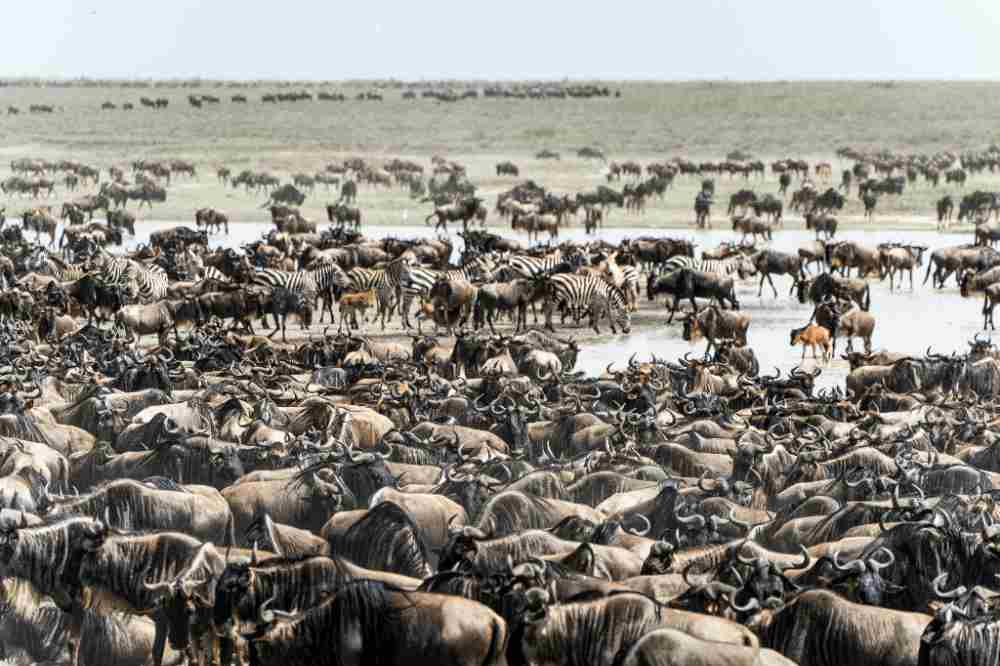
The Great Migration is the year-round movement of wildebeest, zebra and other grazing animals across the Serengeti ecosystem and into Kenya’s Maasai Mara. Rainfall and fresh grazing influence where the herds travel, so no calendar can promise an exact sighting.
A seasonal guide to the herd
- January to March: calving is associated with the southern Serengeti and nearby short-grass plains.
- April to May: herds generally begin moving north and west as the rains and grazing patterns change.
- June to July: some herds move through the western corridor, where the Grumeti River is one possible crossing area.
- August to October: herds may be in the northern Serengeti and cross the Mara River; timing and crossing locations vary.
- November to December: many herds move south again as seasonal rains return.
Where to plan your safari
The Serengeti is the main Tanzanian destination for following the migration. The southern plains, western corridor and northern areas offer different seasonal possibilities. A route through Ngorongoro can add crater wildlife viewing, even though the crater is not itself a migration crossing point.
Set expectations for wildlife viewing
River crossings are unpredictable: herds may gather, wait or change direction. Choose a camp location based on the likely seasonal range, leave room in your schedule and enjoy the resident wildlife as well as the migrating herds.
Plan with current local information
Before booking, ask where the herds have been moving and how recent rain has affected the route. A knowledgeable guide can adjust daily plans as conditions change.